Author Archives: Watching_the_Pigsty

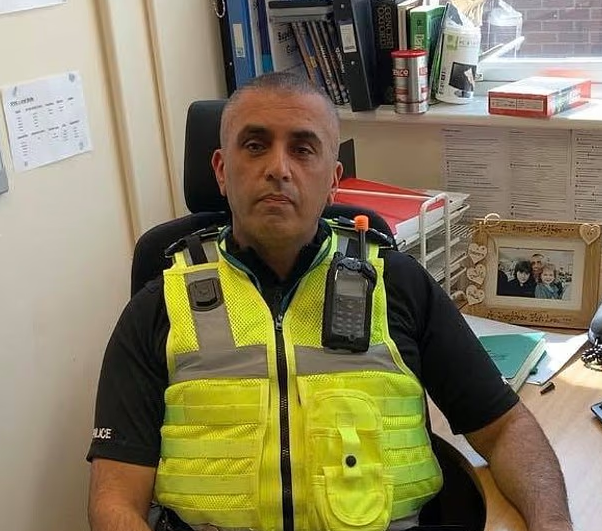
Tarjinderjit Nizzer

Derbyshire Sergeant Nicknamed “Hot Fuzz” Charged with Eight Counts of Misconduct for Abusing Position to Pursue Women

Published: September 5, 2026
Case Status: Awaiting Trial


A former Derbyshire Constabulary sergeant who earned the nickname “Hot Fuzz” among colleagues is facing serious criminal charges after allegedly exploiting his police authority to pursue sexual and emotional relationships with multiple women over a four-year period.

The Charges

Tarjinderjit Nizzer, 57, who resigned from his position as Neighbourhood Sergeant in February 2026, has been charged with eight counts of misconduct in public office following an extensive investigation by Derbyshire Constabulary’s Counter Corruption Unit, operating under the direction of the Independent Office for Police Conduct (IOPC).

The alleged misconduct spans from January 2020 to November 2024, during which time prosecutors claim Nizzer contacted six members of the public and two fellow police officers in attempts to instigate “improper sexual or emotional” relationships.

Additional Offences

Beyond the misconduct charges, Nizzer faces two further serious allegations:

  1. Attempting to pervert the course of justice – specifically, cancelling a traffic offence report
  2. Computer misuse – allegedly using police systems to run unauthorised checks on an individual without legitimate policing purpose

These additional charges suggest a pattern of behaviour where police authority and resources may have been systematically abused for personal gain.

The Investigation

The case originated from a conduct referral made by Derbyshire Constabulary to the IOPC on 26 February 2024. What followed was an 18-month investigation that ultimately led to criminal charges being authorised.

The IOPC’s involvement indicates the seriousness of the allegations, as the oversight body typically steps in for cases involving potential abuse of position by officers, particularly where matters of sexual misconduct and corruption are concerned.

Court Appearance

Nizzer is scheduled to appear at Nottingham Magistrates’ Court on 2 October 2026, where the charges will be formally put to him. At that stage, the case will either proceed to the Crown Court for trial or be committed for sentencing depending on how the defendant pleads.

Pattern of Concern

This case raises troubling questions about the vetting and monitoring of officers in positions of community trust. The allegation that Nizzer targeted both members of the public and fellow officers over a nearly five-year period suggests behaviour that went unchecked for a significant duration.

The use of police computer systems for personal purposes – a recurring theme in UK police misconduct cases – demonstrates how technological access can become a tool for abuse when proper oversight is lacking.

The “Hot Fuzz” Moniker

The nickname references the 2007 Edgar Wright comedy film starring Simon Pegg as an overzealous London police sergeant transferred to a rural village. The irony of this nickname being applied to an officer now accused of serious misconduct will not be lost on observers of police culture.

What This Case Represents

Cases like Nizzer’s highlight persistent concerns about:

  • Power dynamics between police officers and the communities they serve
  • Internal reporting mechanisms and whether they function effectively to identify problematic behaviour early
  • The use of police databases for personal purposes, a recurring issue in misconduct proceedings
  • The vulnerability of junior officers to inappropriate advances from senior colleagues

The fact that two of the alleged victims were fellow police officers is particularly noteworthy, suggesting internal power imbalances that may have discouraged earlier reporting.

Looking Ahead

As this case proceeds through the courts, it will be important to monitor whether it triggers wider reviews of conduct within Derbyshire Constabulary. The 18-month gap between the initial referral and charges being laid also raises questions about the resources available to police anti-corruption units and the IOPC.

The criminal justice system will now determine Nizzer’s guilt or innocence. Whatever the outcome, this case serves as a reminder that positions of public trust carry responsibilities that extend far beyond the uniform.


Case Reference: Nottingham Magistrates’ Court, 2 October 2026
Investigating Authority: IOPC / Derbyshire Constabulary Counter Corruption Unit

This article will be updated as the case develops. If you have information about this or other police misconduct cases, contact our editorial team.


Pig beats young girls with police baton.

Two Male Police Officers Assault 13 Year Old Girls in Rotherham

A shocking video went viral recently which shows a burly male police officer pushing, punching, and taking out his baton to what appears to be a group of 12 or 13 year old girls. All that warranted this was apparently one of the girls “getting in the face” of the stocky police officer. What has added to the outrage is that the incident appeared to take place in Rotherham and involved white girls. The same city in which a report published this month gave accounts of how the police not only turned a blind eye to the mass rape of young white girls by Pakistani grooming girls, in some cases they allegedly aided and abetted the perpertrators or even took part themselves.

Police crime scene dead body outline with blood.

Police Prioritize Racism Allegation Over Dying Victim: The Tragic Case of Henry Nowak Highlights Systemic Failures in UK Policing

In the early hours of December 3, 2025, 18-year-old Henry Nowak, a first-year accountancy and finance student at the University of Southampton, was walking home from a night out with friends in the Portswood area. What should have been a routine end to an evening turned into a nightmare when he encountered Vickrum Singh Digwa, a 23-year-old local man. Nowak was stabbed multiple times with a large ceremonial blade—a 21cm (8-inch) kirpan or shastar—and left bleeding out on the street.

According to court testimony in the ongoing murder trial at Southampton Crown Court, Digwa was openly carrying the large blade. Nowak, who had been sending Snapchat videos to friends, filmed the encounter. The footage reportedly shows no clear evidence of racial abuse—Nowak can be heard saying things like “bad man” in what appears to be lighthearted or drunken banter. Digwa allegedly responded and then stabbed Nowak four times, including wounds to the back of his legs and a fatal 8cm-deep puncture to the lung. Nowak tried to escape by climbing a fence but collapsed from blood loss.

When police arrived, Digwa claimed that Nowak had racially abused him. Officers then handcuffed the bleeding 18-year-old victim. Bodycam footage played in court reportedly captured Nowak pleading as he was restrained. He passed out, and only then did officers begin first aid and call for medical help, including a helicopter doctor. Henry Nowak was pronounced dead at the scene a short time later. He drowned in his own blood while in police custody for an alleged “racism” offense based solely on his attacker’s word.

Digwa denies murder, claiming self-defense after an alleged assault and racial abuse. His mother, Kiran Kaur, faces charges for assisting an offender by allegedly removing the weapon from the scene. The prosecution disputes Digwa’s account, noting evidence like Nowak’s phone found in Digwa’s possession and questions about the turban.

This case is not just a tragedy—it is a damning indictment of priorities in British policing. Officers arriving at a scene with a clear victim bleeding profusely from multiple stab wounds chose to handcuff him based on the perpetrator’s racism claim rather than immediately rendering aid or securing the armed suspect. In a country plagued by knife crime, where emergency response should focus on life-saving first, the fear of “racism” accusations appears to have overridden basic police instincts and training.

Henry’s family must be devastated. A promising young man—British-Polish, out with football mates—robbed of his life, and then denied dignity in his final moments. Neighbors reportedly heard him crying out that he had been stabbed and was dying. Yet the response prioritized narrative over evidence and humanity.

This incident echoes broader concerns about “two-tier policing” and the long shadow of reports like Macpherson, which emphasized institutional racism and led to decades of diversity training. Critics argue this has created a chilling effect: officers hesitant to act decisively when minority suspects make counter-allegations, even in life-or-death situations. Elon Musk and others have publicly condemned the handling, with some offering support for accountability measures.

Questions abound for Hampshire Police: What training led to this? Was there immediate assessment of injuries? Why was the armed individual not the immediate focus? Bodycam footage and full investigation are crucial, as trials are ongoing and facts must be proven in court. But the public outcry is justified—when a dying teenager is arrested for “racism” while his stabber walks free initially, public trust erodes further.

Henry Nowak’s death demands answers, not excuses. Police exist to protect the innocent and preserve life, not to triage based on race politics. For a blog dedicated to police corruption and accountability, this case exemplifies how ideological capture can have lethal consequences. Rest in peace, Henry. Your story must fuel demands for reform: better threat assessment, immediate medical priority for victims, and policing that serves justice—not narratives.

Families and communities deserve better. If this is “anti-racism” in practice, it has failed everyone involved.

Metropolitan Police officer using personal phone at crime scene, illustrating misconduct hearing over photographing evidence

Met Police Officers Photographed Deceased Body on Personal Phones

In a case that has drawn fresh scrutiny to policing practices in London, two Metropolitan Police officers have received final written warnings after using their personal mobile phones to photograph a dead body and other evidence, with images shared via WhatsApp and one later shown during a training session.

The misconduct hearing, which concluded earlier this year, revealed that officers at the scene of a sudden death in Dalston, east London, in September 2021, resorted to personal devices because they believed police-issued equipment was inadequate for capturing quality images. PC Billy Manning kept a photo of the badly decomposed body of an elderly resident—who had been dead for days or weeks—on his phone. He later displayed it to colleagues at a Shoreditch training course, describing it as “a bad one,” prompting discomfort and a report from two officers.

Manning deleted the images from his iPhone library but not from WhatsApp. When warned by PC Zak Malik, who had sent the photos, Manning responded with laughing emojis. Further investigation uncovered additional evidence photos on his device, which he described as “common practice.” He was also found to have created a WhatsApp group containing sexist, homophobic, ableist, and transphobic content.

PC Frankie Jordan faced similar findings for retaining evidence images on his personal phone, claiming he had forgotten they were there and that the practice was routine. The panel noted “confused and conflicting guidelines” on personal device use, with even senior leadership interpreting them differently.

Both officers received final written warnings—Manning for two years and Jordan for three—and no criminal charges were brought. The Met apologised to those affected, describing the actions as “highly inappropriate” and below expected standards. The force has since banned personal phones for such purposes and upgraded equipment.

Wider Context of Met Police Challenges

This incident, while resulting in relatively light sanctions compared to more serious cases, fits into a broader pattern of concerns about conduct, culture, and integrity within Britain’s largest police force. The Metropolitan Police has faced repeated high-profile scandals involving misconduct, from sexual offences and domestic abuse by officers to racism, misogyny, and corruption.

Notable among these was the 2021 conviction of PC Wayne Couzens for the murder of Sarah Everard, which exposed systemic failures in vetting and handling complaints. This was followed by the case of PC David Carrick, who raped and sexually assaulted multiple women over years while serving. Such cases prompted Baroness Louise Casey’s 2023 review, which criticised the force’s culture and led to significant reforms under Commissioner Sir Mark Rowley.

Rowley has described efforts as the “biggest corruption clear-out in British policing history,” with over 1,400 officers and staff removed in recent years, dismissals trebling, and internal reporting surging. Initiatives include a dedicated Anti-Corruption Command and use of AI tools like Palantir software to flag misconduct, including shift-roster abuse and other integrity issues.

Recent examples include gross misconduct findings against multiple officers at Charing Cross police station following a BBC Panorama undercover investigation that captured racist, misogynistic, and violent comments. Several were sacked, with ongoing probes into potential case corruption.

Critics argue that while progress has been made—such as improved vetting and proactive investigations—deep-rooted cultural issues persist. Privacy breaches like the handling of images of the deceased echo past public outrage over insensitive treatment of victims and families. The force acknowledges that rebuilding public trust remains a long-term challenge, potentially spanning a decade or more.

The Met maintains that the vast majority of its officers serve with integrity, but incidents like this underscore the need for consistent standards, clear policies, and accountability to prevent erosion of confidence in policing. As one spokesperson put it, such actions cause “distress” and fall short of what Londoners deserve.

Scotland Yard’s Secret AI Surveillance Exposes Widespread Police Corruption

How a Week-Long Covert Operation Uncovered Hundreds of Corrupt Officers Gaming the System


The Metropolitan Police — Britain’s largest police force — has been rocked by revelations of systematic corruption, misconduct, and criminality among its own ranks, exposed not by investigative journalism or oversight, but by an artificial intelligence surveillance system secretly deployed across the force’s internal data.

The Secret AI Dragnet

In a covert week-long operation conducted without the knowledge of officers or staff, Scotland Yard unleashed an AI spy tool supplied by controversial US tech firm Palantir across its internal systems. The program analyzed years of sensitive data including sickness records, overtime claims, expenses, building access logs, and public complaints — creating a comprehensive digital dragnet designed to catch “rogue” officers.

The results were damning.

The Scale of Corruption

The AI uncovered evidence of hundreds of officers engaged in serious misconduct:

  • 100 officers now face gross misconduct investigations
  • 615 officers have received formal warning notices
  • 598 cases involve the systematic abuse of IT shift systems for personal or financial gain
  • 42 senior officers — from chief inspector to chief superintendent rank — face dismissal for lying about office attendance, claiming to work from home in violation of Met guidelines requiring 80% office presence
  • 12 officers face gross misconduct proceedings for concealing their membership in the Freemasons
  • 30 officers remain under active suspicion
  • 3 officers suspended and 2 arrested for role abuse
  • 30 additional officers flagged for “suspicious behaviour”

What They Were Doing

The corruption exposed wasn’t minor rule-breaking. Senior investigators discovered officers engaged in:

  • Fraudulent overtime claims: Systematically logging false overtime to inflate paychecks
  • Shift manipulation: Scamming duty rosters to claim extra days off while still receiving pay
  • Sexual harassment of colleagues: Abuse of position for sexual purposes
  • Sexual assault: Criminal behaviour by those sworn to protect the public
  • Freemason concealment: Deliberate hiding of membership in the secretive organization, raising questions about conflicts of interest and loyalty

Commissioner Sir Mark Rowley, who commissioned the AI review following the BBC Panorama Charing Cross scandal exposing racist and misogynistic officers, described the findings as “extraordinary” and “soul destroying” for honest colleagues working legitimate overtime.

The Palantir Problem

The choice of technology provider raises serious questions. Palantir — the US tech company founded by billionaire Peter Thiel — also contracts with the Israeli military and Donald Trump’s Immigration and Customs Enforcement (ICE) operation. The company’s recent “manifesto” extolling US power prompted MPs this week to demand a government review of all Palantir contracts.

The Police Federation, representing rank-and-file officers, has attacked the program as “automated suspicion,” warning that “officers must not be subjected to opaque or untested tools that risk misinterpreting unsustainable workload pressures, sickness or overtime as indicators of wrongdoing.”

What’s Next

Sir Mark Rowley is now considering whether similar AI programs should be used to flag dangerous predators and crime hotspots — expanding surveillance capabilities beyond internal corruption to operational policing. The Met has already dismissed 1,500 officers since Rowley took the top job in 2022, but the AI findings suggest the rot runs deeper than previously acknowledged.

The Fundamental Question

While the Met frames this as catching “bad apples,” the sheer scale of corruption exposed — from frontline officers to chief superintendents — suggests a systemic problem requiring more than technological fixes. When hundreds of officers across all ranks are gaming overtime systems, sexually abusing colleagues, and hiding affiliations to secret societies, the public must ask: who polices the police?

And if it takes secret AI surveillance to expose what was happening in plain sight, what does that say about the accountability mechanisms that failed to catch it?


For a force that demands transparency from the public it serves, the revelation that it required covert algorithmic surveillance to police itself speaks volumes about the state of British policing in 2026.

Sources include: https://www.dailymail.com/news/article-15763899/AI-spy-program-rogue-police-officers-Scotland-Yard-internal-systems.html

Police Finally Pay Out after 80 YO White Man Tasered Mistaken for 20 YO Black Suspect

Former ballet dancer and actor Colin Morton has received a paltry police payout after being wrongfully Tasered during a 7am raid on his home. The incident occurred when armed officers somehow mistakenly targeted Morton, a white man in his 80s, while they were actually searching for a Black suspect in his 20s.

Morton, who appeared in films including “The Theory of Everything” and “Fantastic Beasts and Where to Find Them,” described the traumatic impact of the incident. “I could have died. For the first time in my life I felt like an old man, and have been left with a stutter and post-traumatic stress disorder. I will never be the same person I was before this,” he stated.

The case nearly went to trial before Morton agreed to settle. “I only agreed to settle because they had already wasted so much time and taxpayers’ money taking it to trial,” he explained.

Despite an internal investigation by the Metropolitan Police that found the call handler missed multiple opportunities to identify the incorrect address, the force denied full liability. A five-day trial had been scheduled for next month before the claims were settled on January 22.

Morton’s lawyer, Rachel Harger of Bindmans, criticized the police for pursuing years of litigation. “There was an early public acknowledgement that a serious error had occurred, yet Mr Morton was forced to pursue proceedings to the brink of trial to achieve any finality,” she said.

Detective Chief Superintendent Neil Smithson offered an apology: “We wholeheartedly apologise to Mr Morton and understand the impact this incident has had, while also recognising the amount of time it’s taken to reach a conclusion in this case. We hope Mr Morton is able to move forward and thank him for his patience during this process.”

Smithson added that the police have “reviewed the circumstances of this incident to identify any learnings and implemented specific training procedures to avoid similar instances in the future. This includes delivering training to each and every call handler within the Met.”

Morton has sold his home in Cricklewood, northwest London, that was raided and plans to use the settlement money toward purchasing a new property.

Source: https://www.dailymail.co.uk/news/article-15499401/Police-payout-white-ex-ballet-dancer-80s-Tasered-kitchen-7am-raid-home-armed-officers-looking-black-suspect-20s.html

GMC police brutality 2025-10-30

Manchester Police Assault Mentally Ill Man

Manchester police attempt to restrain a clearly distressed mentally ill man.

Filmed by a YouTube ‘auditor’, the man is seen shouting in a distressed state outside a fast food restaurant near Piccadily Gardents at around the 35:00 mark of the video. At the 36:50 mark, on of the officers clearly punches the man hard in the stomach. Moments later, the same officer is saying that the man assaulted HIM and that he is under arrest.

Met Police Sacked 180 Officers Last Year

It was revealed this week that Met Police chief Mark Rowley sacked 180 bent psychopathic coppers last year in a bid to do the impossible – clean up the rotten sty that is the Metropolitan Police force.

The revelation comes in the wake of another embarassing scandal for the Met, after a BBC undercover reporter infiltrated London’s Charring Cross police station and secretly filmed officers using shockingly racist and misogynistic language.

Many of the 180 bent pigs were sacked for sexual offences, including using their positions of power to have sex with vulnerable women – including rape victims. Other Met Police officers were involved in sexual crimes against children.

Commissioner Mark Rowley said last week:

I have been very clear from the outset that I wanted to see all those responsible for this appalling behaviour facing gross misconduct hearings at the earliest opportunity. They have no place in the Met.

“This comes in the context of the biggest corruption clear-out in British policing history, which has seen more than 1,400 officers and staff leave the Met in the last three years

Sources include: https://www.standard.co.uk/news/crime/met-police-officers-sacked-misconduct-london-mark-rowley-b1252871.html